A motorcycle suit is a construction in which the upper and lower protective layers form a single whole. One-piece and two-piece suits differ in more than a zipper at the waist: aerodynamics, behaviour in a slide and use cases are different. Which one to choose depends on how often – and where – you ride.
Key takeaways
- One-piece AAA leather is the standard for the track and track days.
- Two-piece with a 360° zipper is as safe as a one-piece in typical road falls.
- For touring choose textile class AA with membrane, vents and a thermal liner.
- For the city a layered set (AA top + AA trousers) is more practical than any suit.
One-piece suit – construction and use
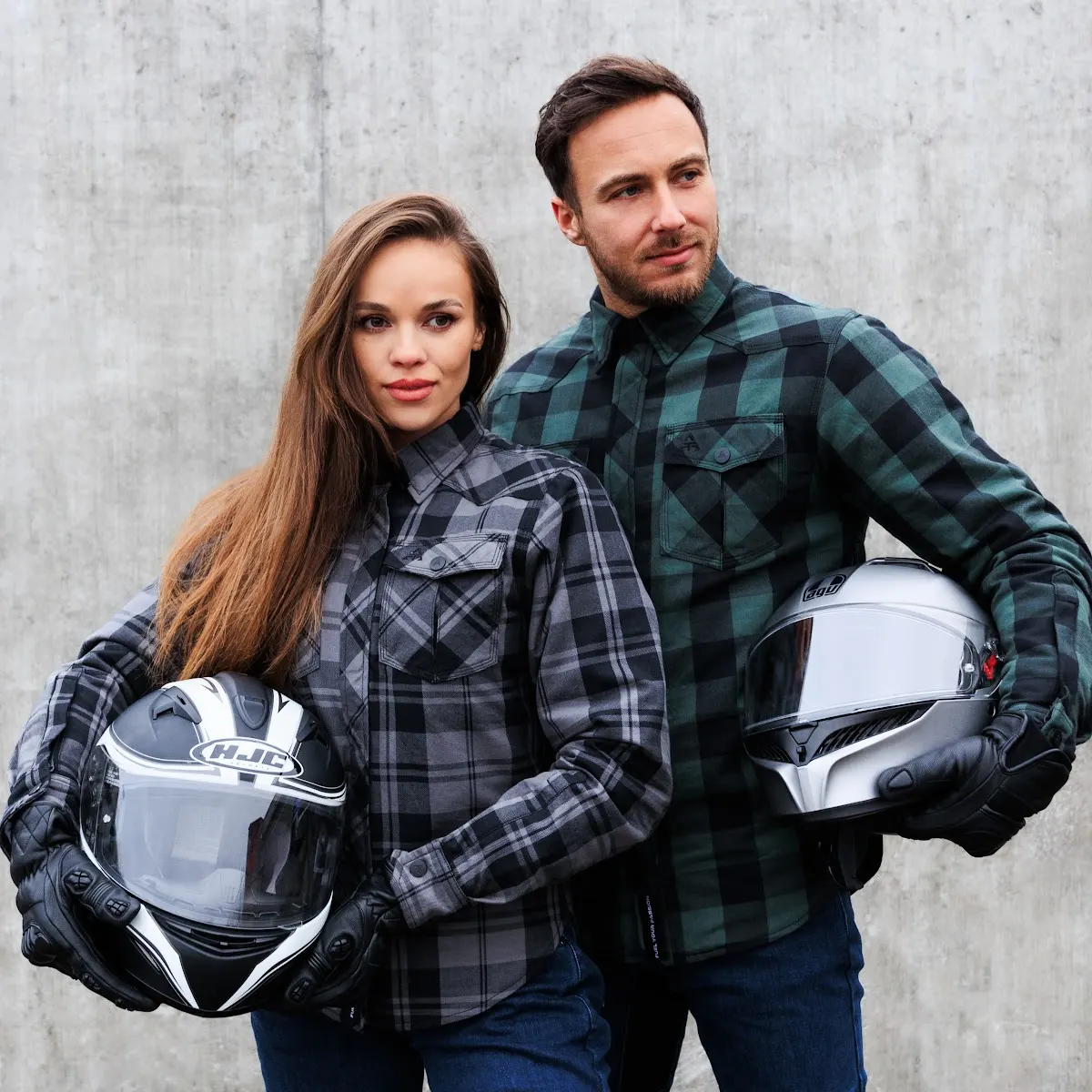
A one-piece suit is a permanently sewn set in which jacket and trousers form one structure. No waist zipper means a continuous protective layer between torso and thighs.
It is typically rated AAA under EN 17092: 1.2–1.4 mm cowhide, full coverage of impact zones with external hard sliders, an aerodynamic hump and chest protectors inside. Ventilation comes from perforated leather and stretch aramid panels rather than zips.
Its use is narrow: race track and track days, and sport riding in a tucked position on supersport bikes. A one-piece suit is the regulatory standard for most track organisers in Europe – a two-piece without a full 360° zipper often fails technical inspection.
Two-piece suit – how does the waist connection work?
A two-piece is a jacket and trousers joined at the waist with a zipper – usually 360° around the body, sometimes a short 240° or 180° section at the back. A 360° zipper gives continuity close to a one-piece and will not separate in a slide if properly fastened.
Is a two-piece suit safe? Yes – provided it has a full circumferential zipper and class AA or AAA. Models with a short 180° zipper are fine for road riding, but not for the track. The advantage is modularity: wear the jacket alone in the city, the trousers on light tours and both together on faster routes. More vent zips and quicker dressing are a bonus.
Leather or textile suit?
| Leather | Textile | |
|---|---|---|
| Typical material | 1.2–1.4 mm cowhide | Cordura 1000D or similar |
| Typical EN 17092 class | AAA | AA |
| Strength | Highest abrasion resistance in a long slide | Waterproof membrane, vents, thermal liner |
| Weak points | Weight, no waterproofing, needs care | Less abrasion margin at very high speed |
| Best for | Track and sport riding | Touring in changeable weather |
Short version: leather for the track, textile for touring. A third way are hybrid laminates combining both materials in zones.
Choice according to riding type
- Race track and track day – one-piece leather AAA suit with a hump. Organiser rules and good engineering sense.
- Long-distance touring – two-piece textile suit with membrane, removable thermal liner and vent zips. Class AA is enough; comfort on 8-hour stages is the priority.
- Sport road riding (supersport) – one-piece, or two-piece joined by a 360° zipper, leather or laminate. Priority: aerodynamics in a tucked position.
- Naked bike, streetfighter, café racer – two-piece leather or textile-leather, a shorter jacket and trousers cut for an upright position. A 360° zipper is optional, but 240° clearly improves continuity.
- City and daily commuting – a suit is usually overkill. A layered AA jacket-and-trousers set is more practical for all-day wear.
Riding mostly in the city?
A layered AA set gives road-level protection and works as everyday clothing. See the men’s and women’s collections.
Layered alternative – jacket and trousers set instead of a suit
For a rider who mostly commutes and goes on light tours, a suit is an impractical investment. A layered set – a separate motorcycle jacket or hoodie plus separate trousers in the same EN 17092 class – gives comparable protection at typical road speeds and is far easier to live with.
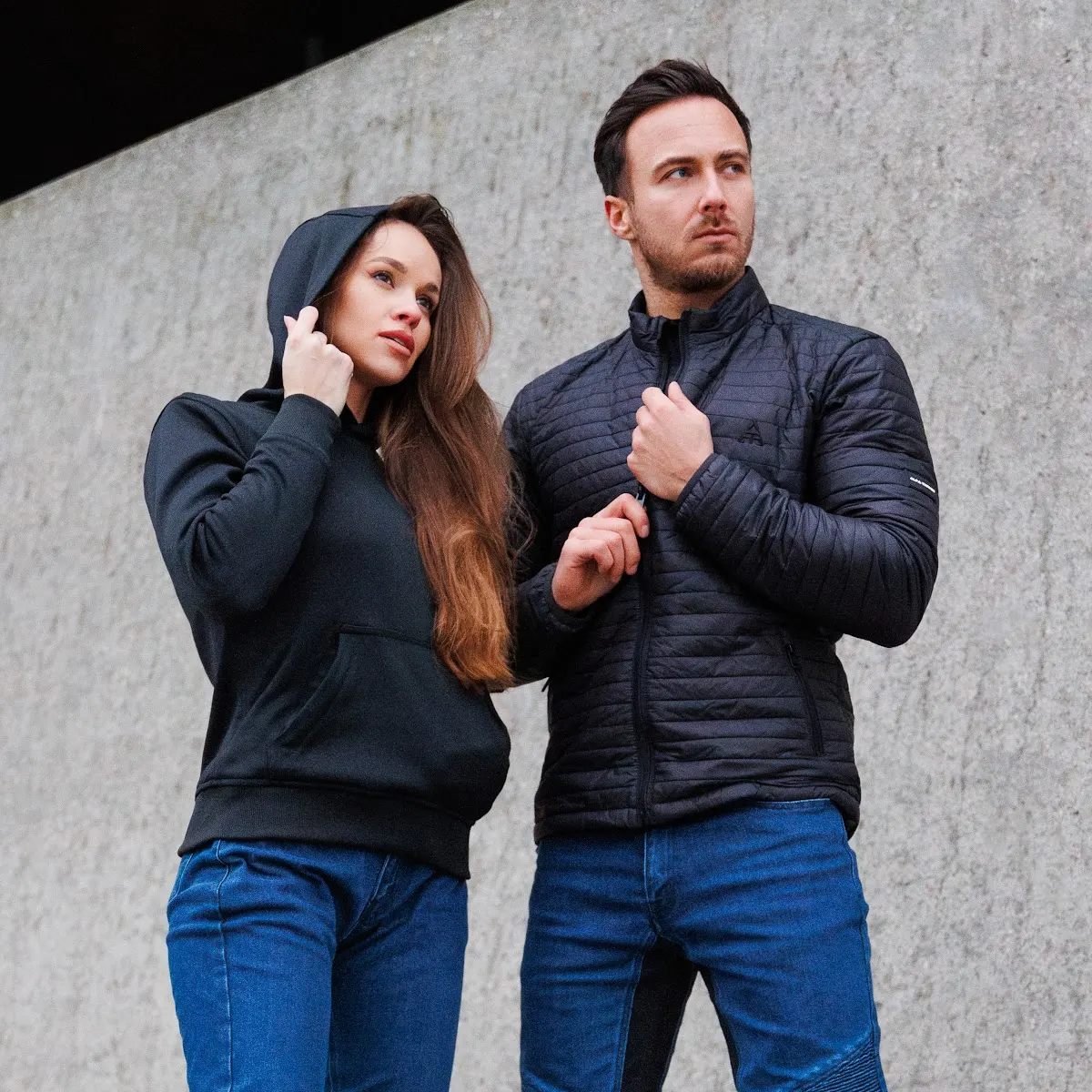
For example, the Victor Beast AA hoodie with Erick Storm AA motorcycle jeans or Onyx Phantom AA cargo trousers make a protective set below 1,300 PLN. The women’s version – Ivy Burn with Ember Ace jeans – follows the same scheme.
FAQ
What motorcycle suit is sensible for a beginner?
For most beginners a layered set is more sensible than a suit: an AA jacket and AA trousers under EN 17092. Beginner speeds do not require AAA, and learning happens mostly in the city and on first short routes, where a suit is uncomfortable. A two-piece textile suit makes sense after the first season, when faster out-of-town riding comes in.
Two-piece motorcycle suit for touring – what should it have?
Textile class AA (Cordura 1000D or an aramid laminate), a waterproof membrane – ideally laminated – a removable thermal liner, vents on chest, back and thighs, CE Level 2 armour on shoulders, elbows and knees, a back-protector pocket, and a 360° or at least 240° connecting zipper.
Is a two-piece motorcycle suit as safe as a one-piece?
With a 360° connecting zipper and an AA or AAA rating, protection in typical road falls is comparable. The difference appears in long slides at high speed and in track crashes into barriers – there a one-piece AAA suit gives a bigger margin. For road riding a two-piece AA with a 360° zipper is safe, as long as you fasten the zipper before every ride.