Motorcycle accident statistics reveal a harsh truth: riders without certified protective gear suffer significantly more serious injuries. But in a market flooded with lifestyle branding, how do you distinguish between a jacket that looks tough and one that is engineered to save your life?
This guide breaks down the science of the EN 17092 standard, the evolution of protective textiles, and the physics of impact technology.
1. Decoding the EN 17092 Standard
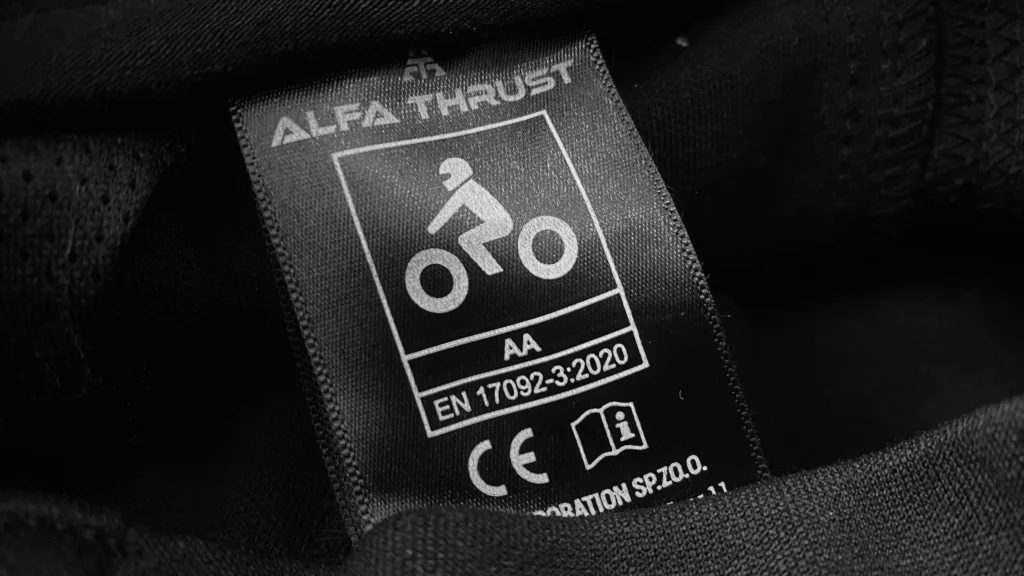
Since 2020, the EN 17092:2020 standard has been the legal benchmark for motorcycle PPE (Personal Protective Equipment) in Europe. It categorizes gear based on its ability to resist abrasion, tearing, and seam failure in a laboratory environment.
| Class | Protection Level | Best Use |
| AAA | The Supreme | Professional racing and track use. Maximum safety. |
| AA | The Performance Standard | The “Road Standard.” Designed for highway use. High safety margins with daily comfort. |
| A | Urban/Light Duty | Low-speed city commuting and short urban trips. |
The Technical Reality: For real-world road protection, Class AA is the benchmark. It provides a massive leap in abrasion resistance over Class A, which is critical during a sliding scenario on asphalt.
2. Material Engineering: Single-Layer vs. Fully Lined
Modern urban gear achieves safety through two distinct engineering paths. Understanding which one fits your riding style is key.
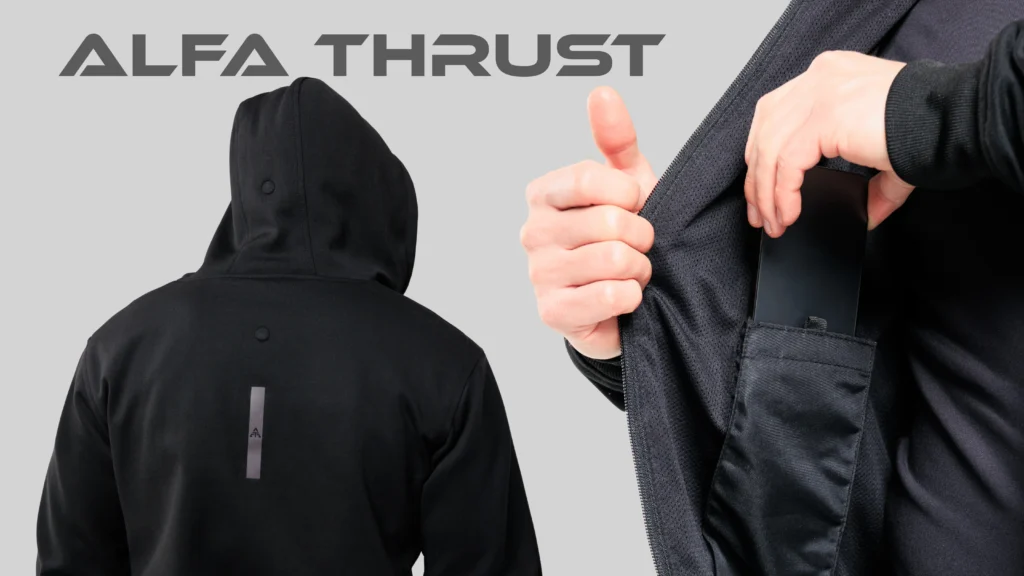
- High-Performance Single-Layer Weave: Featured in our technical hoodies, leggings, and jeans—including the Ivy Burn series, the Victor Beast, and our Erick Storm and Ember Ace jeans. Instead of a bulky separate lining, abrasion-resistant fibers are interwoven directly into the outer fabric.
- The Result: A garment that looks and feels exactly like premium streetwear. It is lighter, more breathable, and stays completely “stealth” while maintaining professional-grade protection.
- The Fully Lined Aramid Shield: Used in our heavy-duty “Stealth” series, including the Onyx Phantom, Laura Vixen, and Casper Steel. These garments utilize a high-density outer shell with a secondary, Full Internal Lining of DuPont™ Kevlar®.
- The Result: This creates a “double-skin” effect. The inner lining provides a powerful thermal and friction buffer during a prolonged slide, offering an elite margin of safety for high-speed road sessions.
3. Impact Technology: The Physics of “Smart” Armor
While the fabric handles the slide, the protectors handle the hit. Modern armor has evolved from stiff plastic to “Intelligent Composites.”
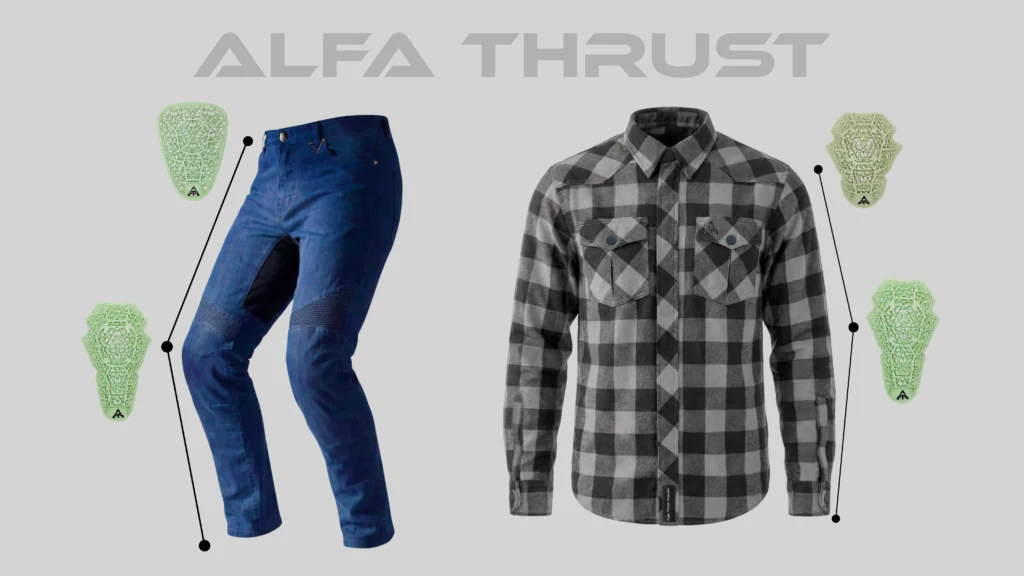
- Non-Newtonian Physics: The highest-performing protectors utilize materials that stay soft and flexible during normal movement—maintaining a slim, fashionable silhouette—but lock their molecular structure instantly upon impact to dissipate energy.
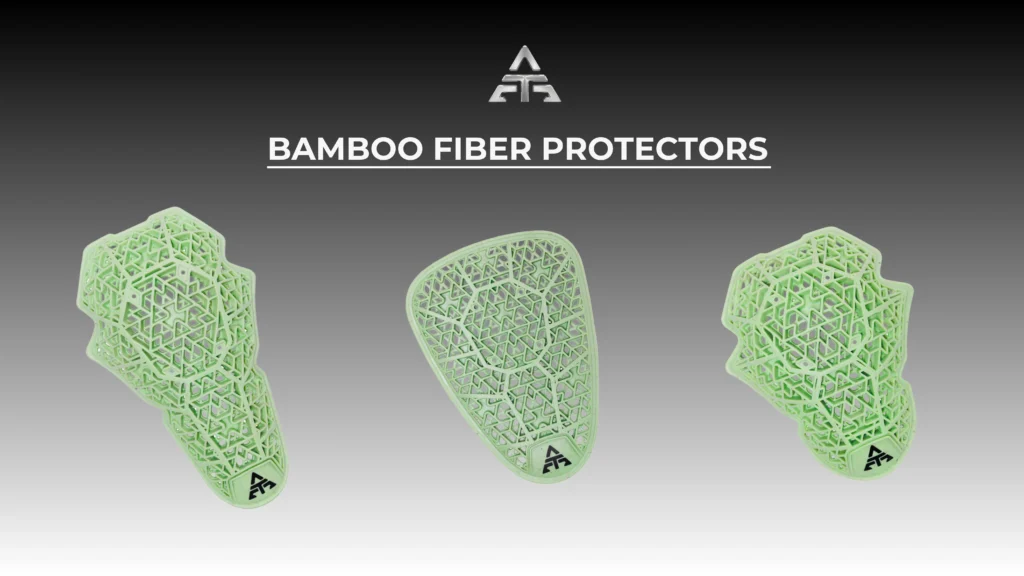
- The Sustainable Frontier: We are moving toward Circular, Bio-Enhanced Armor. By utilizing a high-performance composite infused with Natural Bamboo Fiber, these protectors meet strict European environmental standards. They are 100% Recyclable, offering a sustainable alternative to traditional petroleum-based synthetics.
- CE Level 2: This is the most critical spec. Level 2 armor transmits significantly less force to your body than Level 1. In an urban environment where impacts with curbs or vehicles are a risk, Level 2 is the professional standard.
4. Seam Integrity: The Weakest Link
A jacket or pair of jeans is only as strong as its stitching. Even the toughest fabric will fail if the seams burst open.
- Safety Seams: High-quality gear utilizes hidden safety seams in high-risk zones. This ensures that even if the outer decorative thread is worn away by friction, the structural integrity of the garment remains intact.
5. Functional Hardware & Active Safety
- The “Anti-Flap” Standard: Technical hoodies like the Ivy Burn and Victor Beast include Hidden Magnetic Anchors on the back. This ensures the hood stays flush against the spine, preventing wind turbulence and fatigue at speed.
- Intuitive Closures: Found in the Casper Steel and Laura Vixen, Hidden Magnetic Flaps over zippers and pockets allow for seamless, one-handed operation while wearing gloves.
- Stealth Reflectivity: Safety shouldn’t require a neon vest. Our designs subtly incorporate Reflective Strips and logos that stay invisible by day but provide high 360-degree visibility to headlights at night.
The Verdict
When choosing gear, look past the aesthetic. Check for the Class AA label, insist on CE Level 2 Bio-Composite armor, and choose between the lightweight agility of a Single-Layer weave or the maximum protection of a Full DuPont™ Kevlar® Lining.
If a piece of clothing meets these standards, it is a piece of professional equipment—not just fashion.