In the European Union, motorcycle clothing is officially classified as Personal Protective Equipment (PPE). Since 2018, any garment sold as “protective” must pass specific laboratory tests.
But what do the codes on the labels actually mean? To choose the right gear for the urban environment, you need to understand the two pillars of motorcycle certification: EN 17092 (The Garment) and EN 1621 (The Armor).
1. The EN 17092 Standard: Structural Integrity
The EN 17092 standard measures how a garment performs during a slide. It tests abrasion resistance, tear strength, and seam integrity in a controlled environment.
| Class | Performance Level | Typical Application |
| AAA | The Track Standard | Designed for professional racing; maximum abrasion resistance. |
| AA | The Road Standard | The Professional Choice. Optimized for highway and touring speeds. |
| A | The Urban Standard | Light-duty, designed for low-speed city commuting. |
Technical Insight: While many urban garments settle for Class A, serious riders look for Class AA. It offers a significantly higher threshold for friction-heat and impact-tearing, providing a safer margin for road and highway riding.
2. The EN 1621 Standard: Impact Management
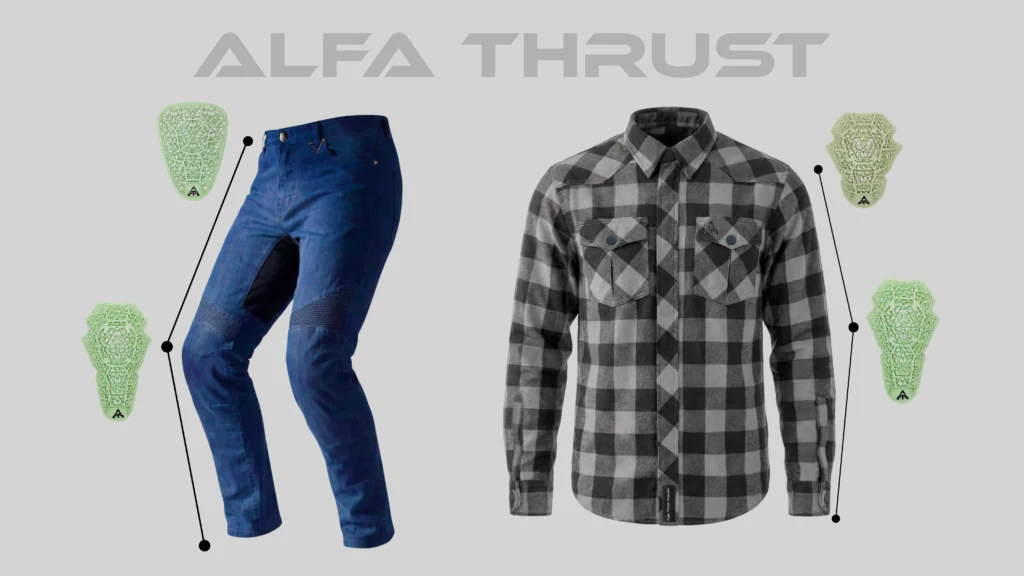
While the fabric handles the “slide,” the protectors handle the “hit.” Armor is certified separately under the EN 1621 series.
- Level 1: The basic standard. Suitable for lightweight urban gear.
- Level 2: The Gold Standard. These protectors absorb significantly more energy, transmitting less force to your body.
Innovation in Armor: Modern high-end armor utilizes Non-Newtonian materials that stay soft while moving but lock instantly upon impact. Additionally, the industry is shifting toward Bio-Enhanced Composites infused with natural fibers, making protectors sustainable without compromising professional safety specs.
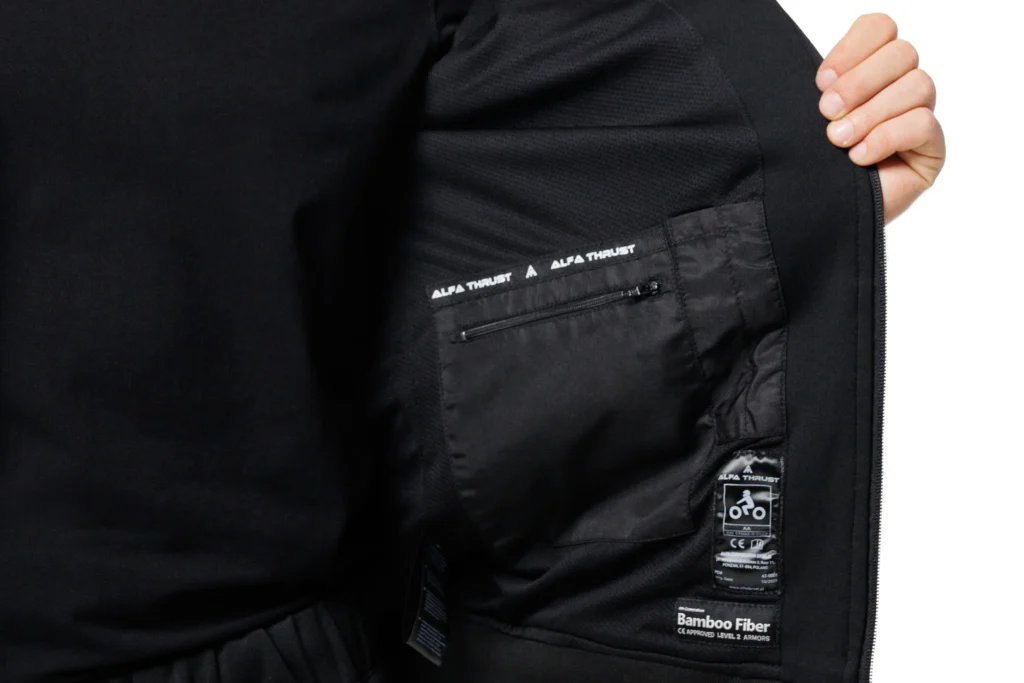
3. How to Verify a Genuine Technical Label
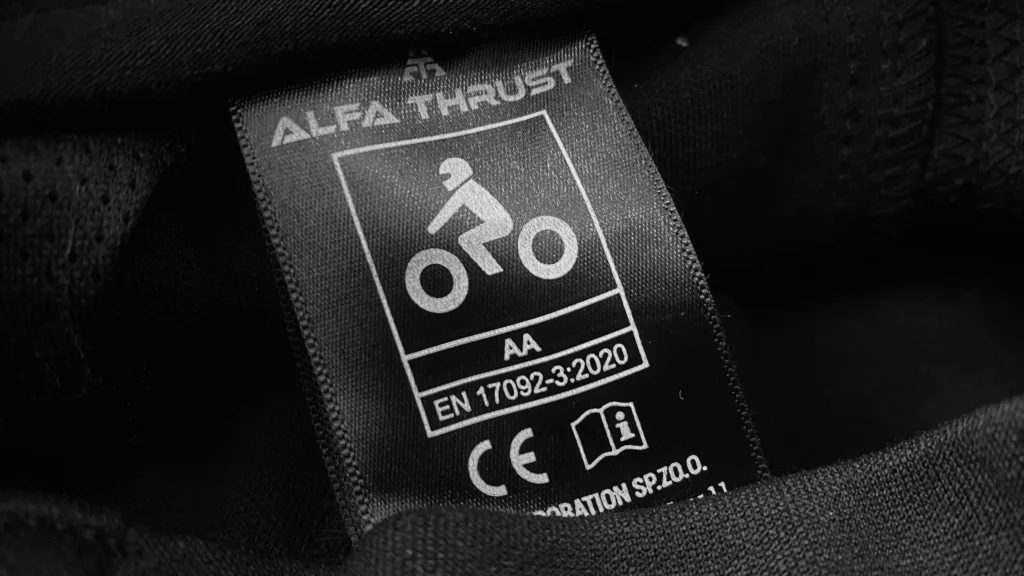
A legitimate certification label is a legal requirement. It must be permanently sewn into the garment—not a sticker or a loose paper tag.
A valid technical label generally includes:
- The CE Mark: Representing conformity with European safety regulations.
- The Specific Standard: Reference to the garment testing standard (e.g., EN 17092).
- The Classification: Identifying the protection class (e.g., AA or A).
- The Pictogram: An icon of a motorcyclist, confirming its intended use.
4. Seam Construction: The Invisible Barrier
A common failure point in “fashion-style” motorcycle gear is the seams. Even the strongest fabric is useless if the thread snaps upon contact with the asphalt.
- Safety Seams: Professional technical gear uses hidden safety seams in high-risk zones. This ensures that even if the outer decorative thread is worn away by friction, a secondary, reinforced internal seam keeps the garment structurally intact.
5. Hardware and Active Safety
Technical safety also includes how the garment behaves under wind pressure and movement.
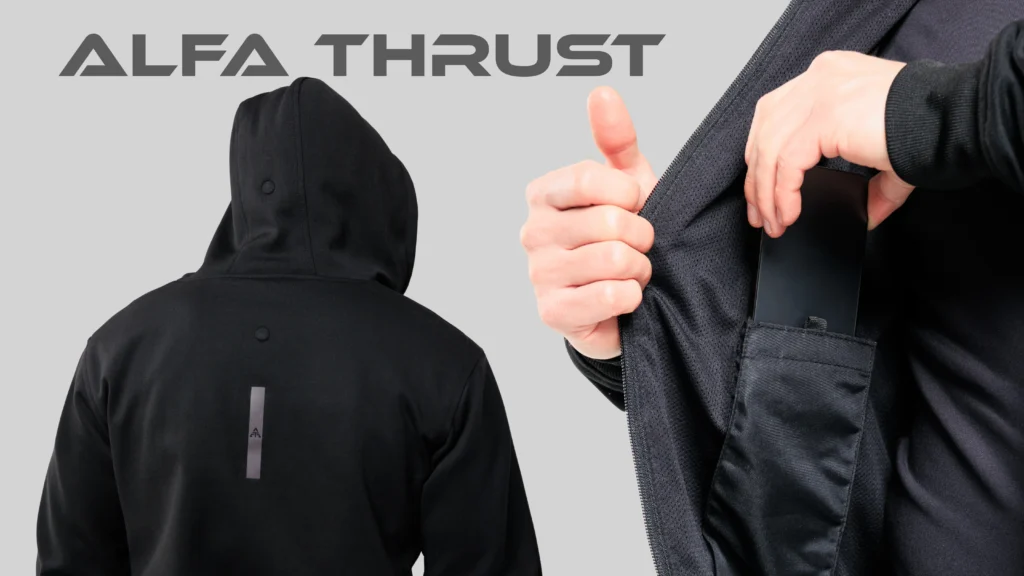
- Closure Integrity: High-quality gear avoids traditional buttons that can fail in a slide. Instead, look for Hidden Magnetic Flaps or reinforced zippers to ensure the garment stays closed and the armor stays in place.
- Integrated Visibility: Safety includes being seen. Look for stealth reflectivity—elements that blend into the design by day but provide high-contrast visibility to headlights at night.
The Final Verdict: Gear vs. Fashion
When evaluating gear, remember that certification is the floor, not the ceiling.
- Verify the Label: Ensure it is sewn-in and clearly states the testing standard.
- Prioritize Class AA: It is the benchmark for versatile road safety.
- Demand Level 2 Armor: Your joints deserve the highest impact absorption available.
- Distinguish Intent: Technical riding gear is engineered for the slide. “Lifestyle” or “Fashion” jackets may look the part, but if they lack the internal technical certification, they are designed for the destination, not the protection of the rider.